
Clarity Meets Performance: The Importance of Premium Glass in North Atlanta
In Alpharetta, Georgia, where the architectural standard ranges from stately brick traditionals in Windward to modern farmhouse aesthetics near Avalon, windows are a defining feature of the home.
However, the humid subtropical climate of Fulton County places immense stress on these architectural eyes. The cycle of intense summer heat, high humidity, and occasional winter freezes creates a challenging environment for residential glass.
For many homeowners, the realization that their windows are failing starts subtly—a bit of condensation that won’t wipe off, a milky haze obscuring the view, or a noticeable draft near the sash. The common assumption is that the entire window frame must be ripped out and replaced, a costly and invasive construction project.
This is a misconception. In the vast majority of cases, the frame is structurally sound; it is the Insulated Glass Unit (IGU) that has failed.
This comprehensive guide, prepared by Ray Glass LLC, serves as the ultimate resource for Alpharetta residents. We will dismantle the science of seal failure, explore the technology of Low-E coatings essential for Georgia summers, and explain how replacing just the glass—not the window—can save your home’s aesthetic and energy efficiency.
The Science of Failure: Why Alpharetta Windows Fog and Fail
To understand why your view is obstructed, you must understand the engineering of a modern window. Double-pane windows are not just two pieces of glass glued together; they are a pressurized system.
1. The Anatomy of an Insulated Glass Unit (IGU)
An IGU consists of two (or sometimes three) panes of glass separated by a spacer bar. This spacer creates a chamber typically filled with an inert gas like Argon. The entire unit is sealed with a high-grade sealant (usually polyisobutylene or silicone) to keep the gas in and moisture out. Ideally, this unit acts as a single, hermetic element.
2. Solar Pumping and Thermal Stress
In Alpharetta, a window facing west in July can reach surface temperatures exceeding 150°F. At night, it cools down. This daily heating and cooling cause the air or gas inside the IGU to expand and contract. This phenomenon, known as “solar pumping,” puts repetitive stress on the seals.
The Failure Point: Over years of this expansion and contraction, microscopic fractures develop in the seal.
The Result: Moisture from the humid Georgia air penetrates the seal. The desiccant (drying agent) inside the spacer bar becomes saturated. Once the desiccant can no longer absorb moisture, condensation forms between the panes. This is the dreaded “foggy window.”
3. Physical Impact and Stress Cracks
Beyond seal failure, glass breaks. Whether from a stray golf ball, a landscaping accident, or “stress cracks” caused by foundation settling or extreme thermal shifts, a broken pane compromises the home’s security and thermal envelope immediately.
Glass Replacement vs. Full Window Replacement: The Smart Choice
Homeowners are often pressured by sales representatives to replace their entire window system—frames, sashes, and trim—when they encounter fogged glass. Ray Glass LLC advocates for a more surgical and cost-effective approach.
Preserving the Envelope
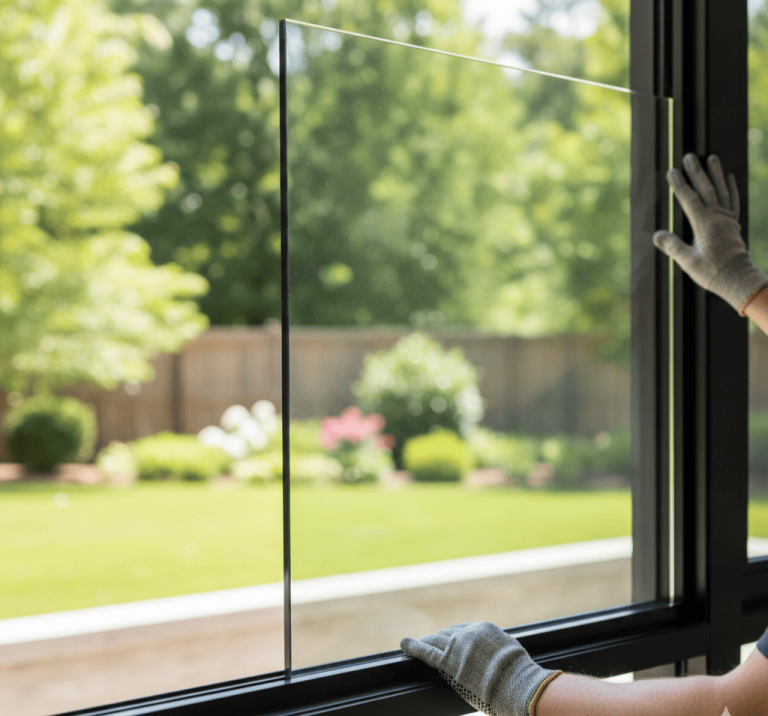
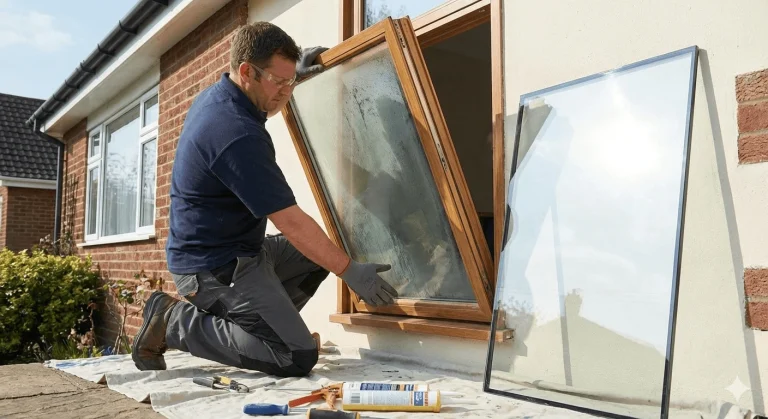
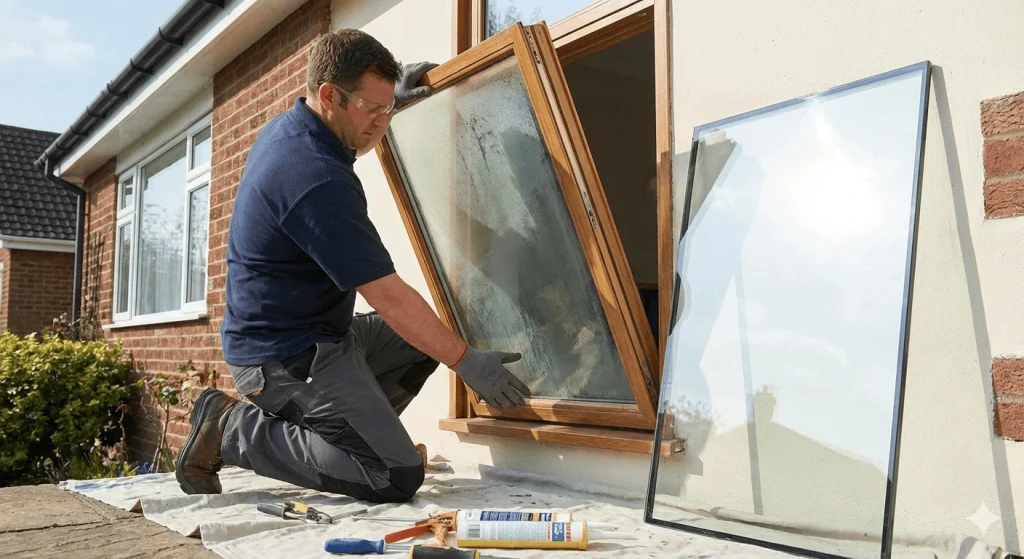
Replacing the glass (the IGU) involves removing the stops or glazing beads, extracting the failed glass unit, and installing a new, factory-sealed IGU into the existing sash.
No Stucco/Brick Damage: We do not cut into your exterior siding or brick.
Matching Aesthetics: Your window frames remain. You don’t have to worry about mismatched trim or painting new sashes to match your interior.
Efficiency: The new glass we install utilizes modern Low-E technology, often upgrading the energy performance of the window beyond its original state, even while keeping the old frame.
[Table: Glass Replacement vs. Full Window Replacement]
| Feature | Glass Replacement (IGU Only) | Full Window Replacement |
| Scope of Work | Surgical replacement of glass unit | Removal of frame, sash, and trim |
| Construction Mess | Minimal to None | High (Dust, Debris, Paint touch-ups) |
| Timeline | Fast Installation (often 1 day) | Lengthy (Fabrication + Install) |
| Aesthetic Impact | Retains original architectural look | Changes look; may require painting |
| Cost Efficiency | High (Labor & Material focused) | Lower (High overhead & structural work) |
| Energy Efficiency | Restores or Upgrades R-Value | Upgrades R-Value |
Glass Technology: Engineering Comfort for the South
Not all glass is created equal. In Alpharetta, where cooling costs are a primary concern, the glass package you choose determines your home’s energy profile.
Low-E Coatings (Low-Emissivity)
Low-E glass is coated with microscopically thin layers of silver or other metal oxides.
The Mechanism: In the summer, Low-E glass reflects the sun’s infrared heat (solar heat gain) back outside, keeping your AC bill down. In the winter, it reflects interior heat back into the room.
UV Protection: Low-E coatings also block a significant percentage of UV rays, preventing your hardwood floors, carpets, and furniture from fading.
Argon Gas Fill
To maximize insulation, Ray Glass LLC recommends IGUs filled with Argon gas. Argon is denser than air. When sealed between the panes, it slows down the transfer of thermal energy. It acts as a buffer, preventing the outdoor heat from conducting through the glass to the inside.
Safety Glass: Tempered vs. Annealed
Building codes in Alpharetta and Fulton County dictate where safety glass must be used.
Annealed Glass: Standard glass used in most windows. If it breaks, it shatters into large, sharp shards.
Tempered Glass: Heat-treated for strength. Required by code in bathrooms (near tubs/showers), adjacent to doors, or windows close to the floor. If broken, it crumbles into small, dull granular chunks, preventing injury.
The Ray Glass LLC Process: Precision and Craftsmanship
Replacing an IGU is a trade that requires precise measurement and careful handling. An error of 1/8th of an inch can lead to a drafty window or a stress crack.
Step 1: The Diagnostic Assessment
We visit your Alpharetta home to inspect the failed windows. We measure the visible glass, the thickness of the IGU (overall thickness matters for fitting into the sash), and identify the type of spacer bar and grid pattern (muntins) if present.
Step 2: Matching the Grids
Many homes in Alpharetta feature internal grids (colonial, prairie, or contour grids) between the glass panes. We meticulously match the pattern, color, and profile of your existing grids so the new glass unit looks identical to the adjacent windows.
Step 3: Fabrication and Preparation
Your custom IGUs are fabricated in a controlled environment to ensure a perfect hermetic seal. We do not seal glass on-site; factory sealing is the only way to guarantee longevity against fogging.
Step 4: Surgical Installation
Our technicians remove the glazing stops (the wood or vinyl strips holding the glass). We carefully extract the failed unit and clean the sash frame. We install setting blocks—crucial rubber spacers that prevent the glass from sitting directly on the frame bottom, allowing for water drainage and expansion. The new unit is set, sealed with high-grade structural silicone or glazing tape, and the stops are re-installed.
Specialized Applications: Beyond Standard Windows
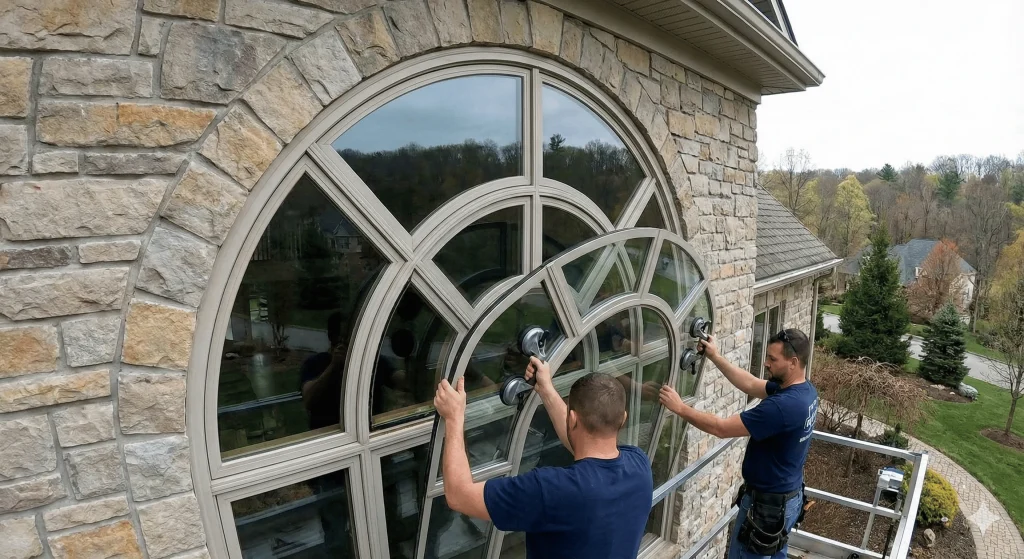
Alpharetta’s diverse architecture, from the historic homes in the Garden District to the custom estates in Country Club of the South, often requires more than standard rectangular glass. Ray Glass LLC specializes in complex glass solutions that many general contractors avoid.
Custom Shapes and Arched Windows
Many luxury homes in North Fulton feature “eyebrow” windows, half-rounds, or trapezoidal transom windows above doors.
The Challenge: These units cannot be bought off the shelf at a big-box store. They require precise templating.
Our Process: We create a physical template of the existing opening to ensure the radius of the curve is exact. We then fabricate a custom IGU that fits perfectly into the unique geometry of your frame, preserving the architectural intent of the home.
Historical Restoration Glass
For owners of older properties who wish to maintain historical accuracy, standard clear float glass can look too “perfect” and modern. We can source restoration glass that mimics the slight waviness or “seed” of vintage glass while still providing the insulation benefits of a modern double-pane unit. This allows you to keep the charm of a 1920s bungalow without sacrificing energy efficiency.
Internal Blinds and Grids
We also specialize in replacing IGUs that feature internal mini-blinds or specific muntin bar colors (contour grids). If the mechanism of your internal blind has failed, or if you simply want to update the look of your grids from brass to modern white, we can customize the new glass unit to include these features between the panes, keeping them dust-free forever.
Frequently Asked Questions (FAQ)
Will replacing the glass fog up again?
Not if installed correctly with high-quality materials. Our IGUs come with a manufacturer’s warranty against seal failure. We use commercial-grade sealants and desiccants designed to withstand the Georgia humidity, ensuring your view remains clear for years.
Can I upgrade my glass without changing my windows?
Absolutely. This is one of the biggest benefits of glass replacement. If your current windows are clear glass with no insulation, we can install High-Performance Low-E Argon units into your existing frames. You get the energy savings of a new window at a fraction of the cost and disruption.
My window sash is rotting. Can you still replace the glass?
It depends on the severity of the rot. If the wood stops (the trim holding the glass) are rotted, we can often replace those during the glass installation. However, if the structural frame of the sash is compromised, we will be honest with you and recommend a full window replacement or a sash kit replacement instead. We prioritize the integrity of your home over a quick sale.
How long does the process take?
Once we measure and order your custom glass, fabrication typically takes a few weeks (expedited options are sometimes available). The actual installation at your home is fast and clean—often completed in a single day for an average-sized house, with no major construction dust or debris.
Is condensation on the outside of my new glass normal?
Yes, and it is actually a good sign! Exterior condensation on summer mornings means your new glass is doing its job. It is insulating so well that the heat from the outside air is not transferring through to warm the outer pane, causing dew to form just like it does on the grass. This proves you are not losing cool air from inside your home.
Conclusion: The Clear Choice for Alpharetta Homeowners
In the high-stakes real estate market of Alpharetta, foggy or broken windows are more than just an annoyance; they are a red flag to potential buyers and a constant drain on your HVAC system.
Choosing to replace the glass rather than the entire window is a strategic decision. It preserves your home’s original character, saves thousands of dollars in renovation costs, and upgrades your energy efficiency to modern standards.
At Ray Glass LLC, we combine local knowledge with technical precision. We understand that your home is your sanctuary, and we treat it with the respect it deserves—delivering clarity, comfort, and craftsmanship in every pane we install.
Don’t let foggy glass obscure your view of the beautiful Alpharetta landscape. Restore the brilliance and efficiency of your windows today. Partner with the specialists who understand the science of glass.
Contact Ray Glass LLC today for a complimentary window assessment. Let us show you how clear your world can be.